
The Nigerian-British Girl Who Wrote a Bestseller in Her University Room and Sold It for Seven Figures at 21
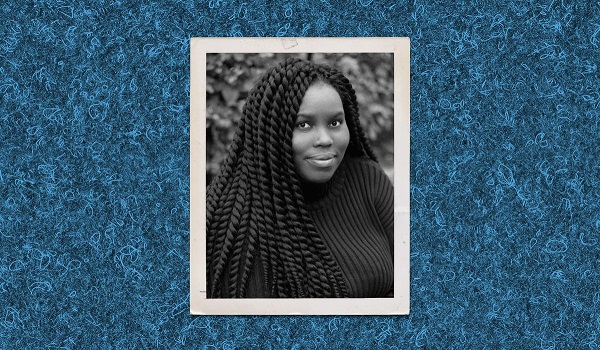
Her mother’s voice is the first thing you should know about.
Not the book deal. Not the New York Times list. Not the number with seven figures attached to it that made headlines and sent her face ricocheting across timelines around the world. Before any of that, there was a woman in South London who believed that bedtime was not just for sleeping.
Every night, she told her daughter stories soaked in Yoruba folklore, stories that carried the smell and the rhythm of Nigeria across an ocean, stories that refused to let a girl growing up in Croydon forget where she came from.
That girl would grow up to be lonely in Scotland, eating microwave meals alone in her university room while her classmates filled the pubs. She would write in the dark until four in the morning because loneliness had a way of leaving her with more hours than she knew what to do with. She would write two novels that nobody wanted. She would receive rejection after rejection and keep going anyway. And then she would write a third novel, in a single semester, running on tea and stubbornness, and that novel would land on the New York Times bestseller list, win an NAACP Image Award, and earn her a publishing deal worth more money than most writers see in a lifetime.
Before she was a phenomenon, she was a Nigerian girl in a cold country, missing home in a way she could only express through fiction. That is where Ace of Spades began. That is where Faridah Abike-Iyimide began.

Who She Is
Faridah Abike-Iyimide was born in 1998 to Nigerian parents in Croydon, South London. She grew up in a neighbourhood that wore its diversity openly: Caribbean and African families, the sounds of many languages, and the constant sense that the world was wide and full of people who looked like her. Her mother carried Nigeria into their home not as nostalgia but as nourishment, telling Faridah bedtime stories rooted in Yoruba folklore and taking her to writing workshops even when money was tight.
She was already writing seriously by her early teens. By the time she left for the University of Aberdeen in Scotland to study English, Chinese, and anthropology, she had been writing fiction for years, though she had never seriously believed she could make a career of it.
At Aberdeen, something shifted. The city was overwhelmingly white, and as a Muslim, she found herself navigating a culture where much of the Scottish student social scene revolved around alcohol. She could not participate in most of the rituals that build university friendships. She found herself alone in her room most nights with her laptop and her thoughts, and she turned both into something extraordinary.
At 21, still finishing her final year of university, she signed a seven-figure two-book deal with Macmillan’s Feiwel and Friends imprint in the United States. The internet took notice immediately. But Faridah herself remained characteristically quiet about it. She describes herself simply as an avid tea drinker and a collector of strange mugs. The seven-figure deal, she would say, was not the point. The book was the point. The kids who needed to see themselves in a story were the point.
Don’t let anyone tell you that you are too young to be a writer and also don’t let anyone tell you that you shouldn’t strive for a creative career.
– Faridah Abike-Iyimide
The Book
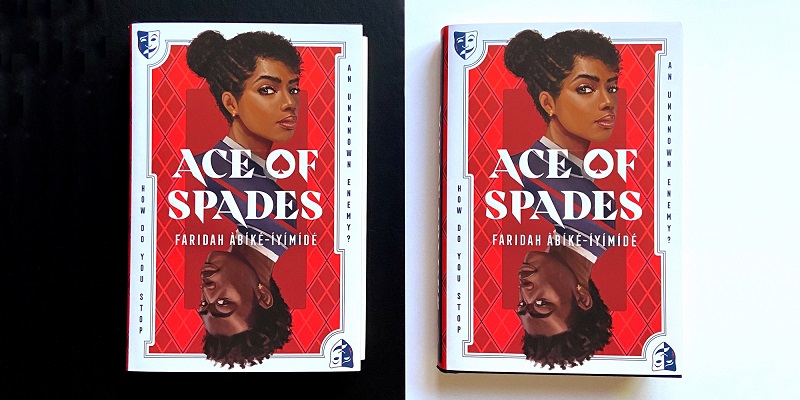
| Title | Ace of Spades |
| Publisher | Feiwel and Friends (Macmillan Publishers) |
| Year | 2021 |
| Genre | Young Adult Thriller |
| Awards | NAACP Image Award 2022, New York Times Bestseller, Books Are My Bag Reader’s Award 2021 |
| Available | Amazon, Bookshops Worldwide, and Major Online Retailers |
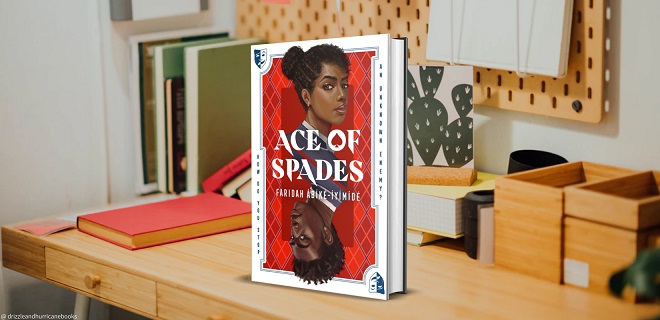
Imagine Gossip Girl with all its glamour, secrets, and anonymous messages that shatter reputations. Now place two Black teenagers at the centre of the story instead of the margins, and layer it with the suffocating dread of Get Out. That is the world Faridah Abike-Iyimide built, and it is far more terrifying because every element of it is real.
Chiamaka Adebayo and Devon Richards are the only two Black students at Niveus Private Academy, one of those pristine American elite institutions where the hallways are funded by old money and the students are never less than perfect. Chiamaka is the school’s head girl: polished, ambitious, strategic. Devon is nearly invisible, a talented musician who prefers the shadows. They have never spoken to each other. Then an anonymous texter called Aces begins sending messages to the entire student body, exposing their secrets, dismantling their futures, threatening everything they have worked for. Someone is playing a game. And the stakes keep rising.
What makes Ace of Spades extraordinary is not just the plot, which is relentlessly propulsive. It is the precision with which Abike-Iyimide maps the specific experience of being Black in a white institution: the microaggressions you notice before you have the language to name them, the exhausting performance of belonging somewhere that was never built for you, the way racism does not announce itself with slurs but operates quietly, systemically, with a smile. For Nigerian readers specifically, these themes land with particular weight. The novel’s exploration of what it costs to be excellent in a space that was not designed to celebrate you is something any young Nigerian who has ever navigated a predominantly white academic or professional environment will recognize immediately.
Ace of Spades debuted on the New York Times bestseller list in its first week of publication. It won the 2022 NAACP Image Award for Outstanding Literary Work in the Youth/Teens category, the Books Are My Bag 2021 Reader’s Award for Young Adult Fiction and was named one of the best YA books of 2021 by the School Library Journal, The Boston Globe, and The Young Folks. Entertainment Weekly called it the hottest YA debut of summer 2021.

The Writing Journey
The story of how Ace of Spades was written is, at its heart, a story about what loneliness can build when you refuse to let it hollow you out.
Faridah arrived in Scotland in her first year of university and immediately felt the ground shift. Croydon had been diverse, warm, loud with familiar accents. Aberdeen was the opposite. She was one of very few Black students. She was a Muslim in a social culture where alcohol was at the center of campus life. Unable to participate in many of the rituals that forged university friendships, she spent most of her evenings alone.
So, she watched television. Specifically, she watched Gossip Girl, all of it, in a matter of days, and felt the same pang she had been feeling her entire life: the shows she loved most had almost no one who looked like her in them.
I thought it would be so cool if the shows I grew up with, like Pretty Little Liars and Gossip Girl, had more Black people in them. So, I started planning a story. I’d usually do uni during the day, then come home and write until 4am.
– Faridah Abike-Iyimide, in conversation with BellaNaija
She finished the first draft of Ace of Spades in a single semester. But the road from draft to published was not smooth. This was actually her third novel. Her first had been queried to agents and collected what she described as “so many rejections”. Her second attracted better responses but still did not sell. She kept writing. She kept submitting.
When she finally queried Ace of Spades, she secured a UK agent and a deal with Usborne Publishing. A US agent followed, and her book was submitted to American publishers. At Feiwel and Friends, an editorial assistant named Foyinsi Adegbonmire, whose name Faridah immediately recognized as Nigerian, read the submission and championed it with the kind of enthusiasm that only comes from genuine recognition.
Foyinsi understood everything. The references no one would get if they weren’t Nigerian.
– Faridah Abike-Iyimide, in conversation with Publishers Weekly
In 2020, still completing her final year of university virtually from London during the pandemic, Faridah signed the seven-figure US deal. She graduated only days before Ace of Spades was released in the UK. She had earned every moment of it, one lonely Aberdeen evening at a time.

The Wit
The specific quality of craft that makes Faridah Abike-Iyimide exceptional is her ability to make systemic injustice feel personal, immediate, and terrifying, without ever losing the reader’s sympathy or the story’s momentum.
This is harder to do than it sounds. Many writers who tackle institutional racism in fiction either intellectualize it to the point where the reader feels lectured to or dramatize it so broadly that the specificity is lost. Faridah does neither. She puts racism on the page the way it actually operates in life: not as a single dramatic event but as an accumulation. A sideways glance here, a sudden silence there, a rule that somehow only ever applies to Devon and Chiamaka. The horror of Ace of Spades builds slowly, like pressure behind a locked door.
A clear example is how she handles the character of Chiamaka. Chiamaka has done everything right. She is the head girl. She is accomplished, poised, excellent by every standard the school claims to value. And yet Aces’ campaign against her reveals, piece by piece, that the institution has been waiting for a reason to cut her down. The school did not celebrate her because it believed in her. It tolerated her because she was useful. The moment she becomes inconvenient, the mask comes off. That is not a plot twist. That is a portrait.
For the reader, this creates a specific kind of dread, the dread of recognition. Because anyone who has been excellent in a space that did not fully welcome them knows this feeling. They have felt the conditional nature of their belonging. Faridah names it on the page, and in doing so, gives her readers language for something they may have lived but never seen written down. That is the rarest gift a writer can offer.
What She Teaches Us
Faridah Abike-Iyimide wrote two novels that nobody published before she wrote the one that changed her life. Read that again.
Two full novels. Two rounds of querying. Two rounds of rejection. And she kept writing anyway, not because she had a guarantee, not because someone told her the third one would work, but because she had a story that mattered and she refused to put it down.
If you are a young Nigerian writer sitting with a manuscript right now, this is the thing Faridah’s journey teaches you. Rejection is not a verdict. It is not the publishing industry telling you that your voice does not belong. It is the publishing industry, a slow, imperfect, often gate-kept institution, telling you that this particular book, submitted to these particular people, at this particular moment, was not the right fit. That is a logistical fact. It is not a fact about your talent.
Write the next one. Submit again. Find your Foyinsi, the person in the room who will recognize the references no one else would get, the person who sees exactly what you were trying to say and champions it with conviction. That person exists. And they are waiting for the manuscript only you can write.
The Invitation
There is a girl in a flat somewhere in Lagos, or Abuja, or Enugu, or Port Harcourt, writing in the dark when everyone else has gone to sleep. She is not sure if what she is writing is good enough. She is not sure anyone will want it. She has maybe been told, directly or quietly, that this is not a practical thing to spend her time on.
This column exists for her.
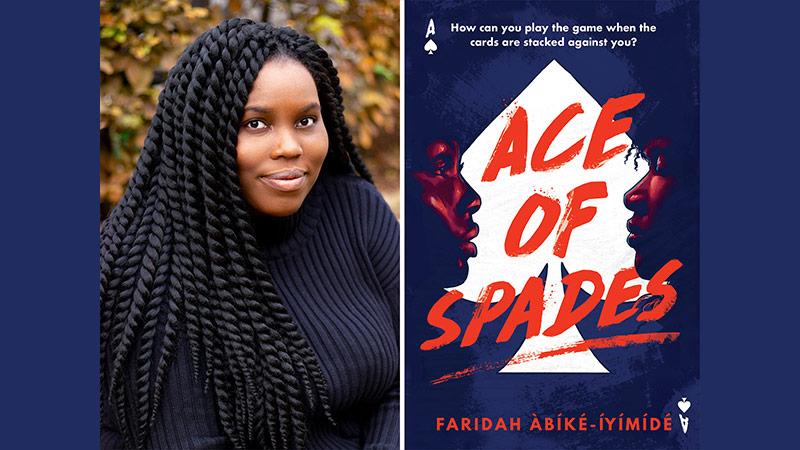
Faridah Abike-Iyimide wrote until four in the morning in a Scottish university room, alone and homesick, fueled by Yoruba bedtime stories she had been carrying since childhood. That became a New York Times bestseller and a seven-figure deal. Her Nigerian roots were not a limitation. They were the whole story.
Your story deserves to be next. Your readers are waiting. Your published book is waiting to exist in the world. You do not need perfect conditions. You do not need to wait until you feel ready. You need to begin, and then to keep going.
When you are ready to take your manuscript from idea to published, ACEworld is here. We help Nigerian authors bring their books into the world, professionally, globally, and with the care that every story deserves.
Celebrating Gen Z Authors is a weekly editorial column on the ACEworld Blog. Published every Monday at 2pm. Next edition: 29 June 2026. To nominate a Gen Z author for a future edition, send an email to contact@aceworldpgs.com.