
The Writer Who Found a Home in Words
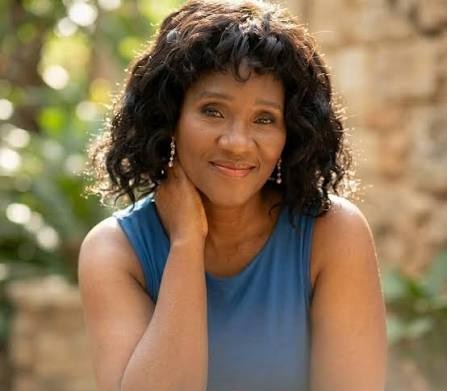
Picture this. You are fourteen years old, and you pick up the diary of another teenager whose words were never meant to become just words. You read her fears, her observations, her hopes, and the private thoughts she committed to paper. And something happens. You begin to wonder what would happen if you started writing your own life down. That is where Tlalane Manciya’s relationship with writing began.
Who She Is
There are writers who seem to have always known they would become writers. Tlalane Manciya’s story feels different.
Her journey into literature began not with a publishing plan or a decision to build a career around books, but with curiosity. At fourteen, she read The Diary of a Young Girl by Anne Frank and became fascinated by the intimacy of a young person recording her thoughts, fears and experiences on paper. Soon after, Manciya began keeping her own journal. That small beginning would eventually become a lifelong relationship with words.
Over the years, Manciya has grown into a versatile South African writer whose work moves across poetry, romance, short fiction, inspirational writing and blogging. She has also worked as a life-purpose coach, bringing together her interest in writing, personal development and helping people make sense of their experiences. Her author profile lists several published works across different forms, reflecting a creative career that has never been confined to a single literary box.
She is based in Cape Town, South Africa, but her writing journey has taken her beyond her immediate surroundings. Her poems have appeared in international anthologies, while her fiction and other writings have found readers through publications and online platforms. She has also performed poetry and been commissioned to write pieces for occasions including memorial services and Women’s Day events.
But perhaps what makes Manciya particularly interesting is the relationship between her writing and her faith. Her Catholic faith is not simply something she keeps separate from her creative life. It informs how she understands writing and the responsibility that comes with having a voice. In an interview with The Southern Cross, she described writing as something close to a vocation, and spoke about the possibility of using words to inspire and help others. This helps explain the breadth of her work.
Manciya can write about romance and heartbreak, but she can also write about faith, purpose, loss, healing and the everyday experiences that shape people. Her interests may move from one genre to another, but the underlying impulse remains remarkably consistent: to use words to make sense of life and, perhaps, help someone else make sense of theirs.
That is the writer we encounter before we encounter the books. Not simply a poet. Not simply a romance writer. Not simply a blogger or life-purpose coach. But a woman who discovered early that writing could become a way of paying attention to life. And she has been paying attention ever since.
“Writing is a vocation for me. It is a spiritual ministry.”
— Tlalane Manciya
The Book
| Title | Love, Lies and Lilies |
| Author | Tlalane Manciya |
| Publisher | Self-published |
| Genre | Poetry / Inspirational |
| First Published | July 15, 2023 |
| Themes | Love, relationships, life, joy, loss, reflection |
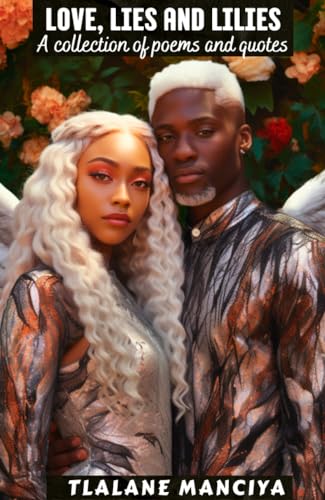
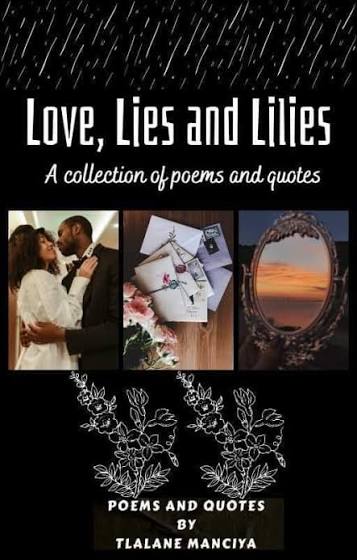
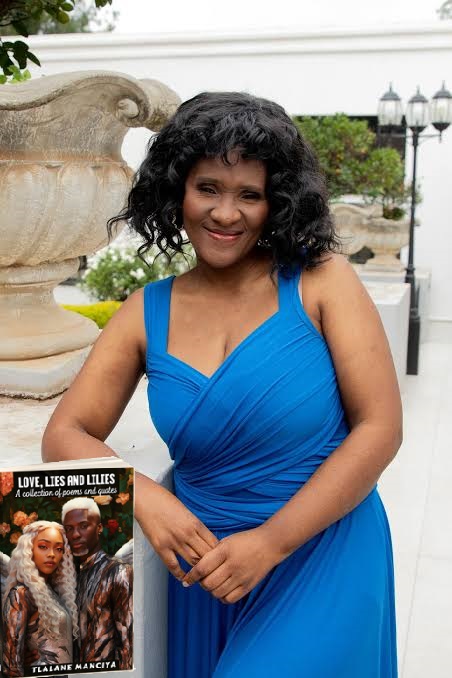
If you want to understand what matters to Tlalane Manciya as a writer, one place to begin is Love, Lies and Lilies. Published in July 2023, the 62-page poetry collection was Manciya’s first poetry book. By the time she published it, poetry was hardly a new experiment for her. She had already spent years writing poems for funerals, memorial services, birthday celebrations, Women’s Day events and other occasions. She had also performed poetry before audiences and had poems published in global anthologies.
In other words, Love, Lies and Lilies did not suddenly make Manciya a poet. It gave a book to the poet she had already become. The collection brings together poems, reflections, thoughts and quotations centred on relationships, love, life, joy, loss and everything in between. Manciya describes the work as something written from the heart, with the intention of feeding both the mind and the soul. That description is important because it captures something fundamental about her approach to writing.
Manciya does not appear particularly interested in separating literature from life. Her poetry comes from life. Her romance stories explore the possibilities and complications of love. Her inspirational writing reflects on faith, relationships and personal growth. Even her commissioned poems emerge from moments when people need words to express emotions that ordinary conversation sometimes cannot carry. This is perhaps why poetry occupies such a natural place in her creative identity.
As Manciya once explained, she writes different kinds of poetry, including love, spiritual and political poems, and sees poetry as a way of staying attuned to the world around her. Love, Lies and Lilies is a book about the things that happen to us while we are busy living. In that sense, the collection is not only a poetry book. It is an invitation to pause and feel.
“Poetry is everyday life.”
— Tlalane Manciya
The Writing Journey
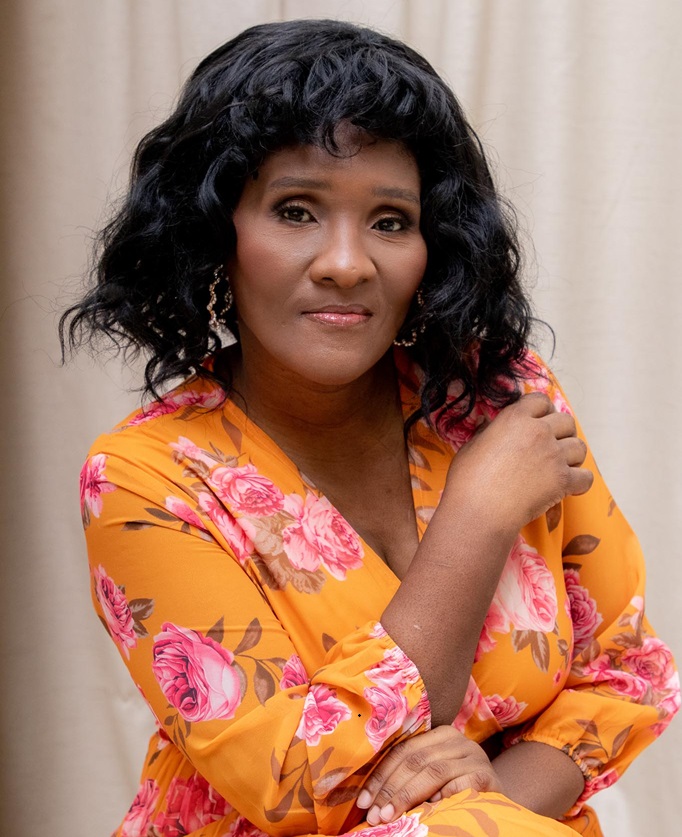
Every writer has a beginning. For Tlalane Manciya, hers began with a teenager discovering another teenager’s diary. Anne Frank gave her the first spark, but Manciya’s journey quickly became her own. After beginning to journal at fourteen, she gradually expanded into other forms of literature. By high school, she had developed a particular affection for romance novels and stories, including Beauty and the Beast, Pride and Prejudice and Gone With the Wind. Those books helped shape her early desire to write romantic stories of her own.
There is something beautifully uncomplicated about that beginning. She read stories. She loved stories. Then she wanted to tell stories. That desire eventually grew beyond private notebooks.
Manciya began publishing her work on different platforms and contributing to publications and anthologies. Her poetry appeared in several anthologies, while her stories and other writings reached readers through platforms including The Star, Amazon and The Piker Press. She also shared much of her work through social media, where she received feedback from readers around the world.
And then came an interesting development. People began asking her to write for them. She was commissioned to create and perform tribute poems for memorial services, Women’s Day functions and other events. At the same time, she continued writing stories and poetry for herself.
The distinction matters. Because somewhere along the way, writing stopped being something Manciya simply did and became something other people began seeking from her. That is often one of the quiet signs that a writer is finding her place. Not when everyone knows your name. But when people begin saying:
“Can you write this for me?”
Her literary journey has also extended beyond romance and poetry. Her bibliography includes works such as Destiny: Are All Actions Forgivable?, State of the Heart, and Good Things: A Holiday Short Story. Her work has also appeared in the Romance Writers Organisation of South Africa’s Sweet Songs of Summer, an anthology featuring nine romance writers.
But perhaps one of the most revealing moments in her writing journey came when she contributed to Letting In the Light, an anthology focused on mental wellness in South Africa.
For Manciya, writing in that context was not simply about adding another publication to her bibliography. She saw the project as an opportunity to use the written word to raise awareness and contribute to the healing of people affected by mental-health challenges during a difficult period. That tells us something important about her evolution. The girl who began writing because she wanted to express herself eventually became a writer interested in what words can do for other people.And that may be the most significant development in her journey.
The Wit
Tlalane Manciya’s wit is not loud. It lives in her ability to move between worlds without losing the emotional centre of her writing. She can write romance, poetry, inspirational pieces and stories, but beneath the different genres is the same curiosity about people and the relationships that shape their lives. Her romance writing is particularly revealing.
Manciya discovered romantic literature while still in high school, long before she had personal experience of romance. Books opened a window into the highs and lows of love and gave her a desire to create stories of her own. That curiosity later became fiction.
Destiny, for example, asks whether love can survive secrets and whether all actions are forgivable. State of the Heart explores whether two people can mend their hearts and love again despite the ghosts of their past. These are romantic questions, certainly. But they are also human questions. Can people change? Can love survive disappointment? What do we owe people after they hurt us? And perhaps that is where Manciya’s literary instinct becomes most interesting.
She uses familiar subjects such as love and relationships to explore less familiar emotional territory. Her poetry does something similar. She writes about love, spirituality, politics and everyday life, treating poetry as a means of staying connected to the world around her. Her wit, then, lies in her attentiveness. She notices that a love story is rarely only about romance. A poem about loss can also be about memory. A story about family can become a story about identity. A reflection about faith can become a meditation on purpose. She understands that the most interesting stories are often hiding underneath the obvious one.
What She Teaches
Tlalane Manciya’s journey offers an important lesson to anyone who has ever wondered whether their writing matters. Start where you are. She did not begin with a publishing deal. She began with a journal. She began by reading another young person’s words and discovering that she, too, had things she wanted to say.
There is another lesson in her journey: Do not limit yourself to one form of expression. Manciya writes poetry, romance, short stories, inspirational articles and other forms of creative work. Her career demonstrates that discovering your voice does not necessarily mean choosing one box and staying inside it.
Then there is the lesson of purpose. Manciya has spoken openly about the relationship between her faith and her writing. Her Catholic faith influences her work, and she sees writing as a way to communicate, inspire and potentially help people through difficult experiences. That gives her writing a purpose beyond publication. She is not simply asking, “How can I become a better writer?” She is also asking: “What can my writing do?” That is a question every writer should eventually confront. Because a book is not only something an author finishes. It is something a reader experiences.
Manciya understands this possibility deeply. Her own advice to aspiring writers centres on prayer, reading, education, perseverance and refusing to become discouraged. She has described writing as a vocation and a spiritual ministry, encouraging writers to honour the gift they have been given. Perhaps that is the greatest lesson she offers. Do not underestimate what your words can do. You may never know who needed to read them.
The Invitation
There is something almost poetic about Tlalane Manciya’s journey. At fourteen, she read another girl’s private thoughts. Then she began writing her own. Years later, those private words had become poems, stories, books, performances and published work reaching readers beyond her immediate surroundings. That transformation should make every aspiring writer pause. Because perhaps the manuscript sitting on your laptop is not insignificant.
Perhaps the poems in your notebook are not “just poems.” Perhaps the story you keep telling yourself you will publish one day deserves a chance to meet its readers now. Manciya’s journey is a reminder that writers do not always begin knowing where their words will take them. Sometimes you simply begin. You write the poem. You finish the story. You submit the piece. You publish the book. Then you keep going.
The world does not need another person waiting for the perfect moment to call themselves a writer. It needs the stories that only writers like you can tell. So if you have been writing quietly, let Tlalane Manciya’s journey remind you of something simple:
Your words cannot touch a reader while they remain hidden.
Write them. Refine them. Publish them. And give someone, somewhere, the opportunity to discover what your words can do.
When you’re ready to take your manuscript from idea to publication, ACEworld Publishers is here to guide you every step of the way. From manuscript development to professional publishing and global distribution, we help authors transform their stories into books that are ready to meet the world.
The Literary Spotlight is a weekly editorial column on the ACEworld Blog celebrating the authors shaping the future of African literature. To nominate an author for a future edition, contact us.
