
The Zambian Writer Turning Questions into Literature

Picture this. You grow up surrounded by books, music and stories without knowing where they will lead you. Years later, you begin putting your thoughts into poems and stories, first for yourself and eventually for others to read. Somewhere along the way, the private work finds an audience. This is the story of the Zambian writer turning questions, memory and survival into literature: Isaac Kanyinji.
Who He Is
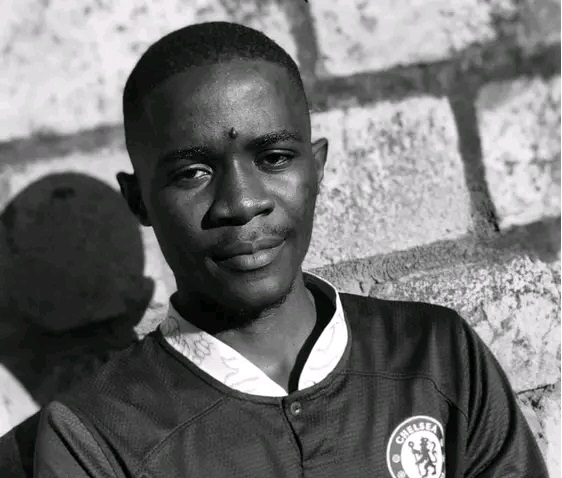
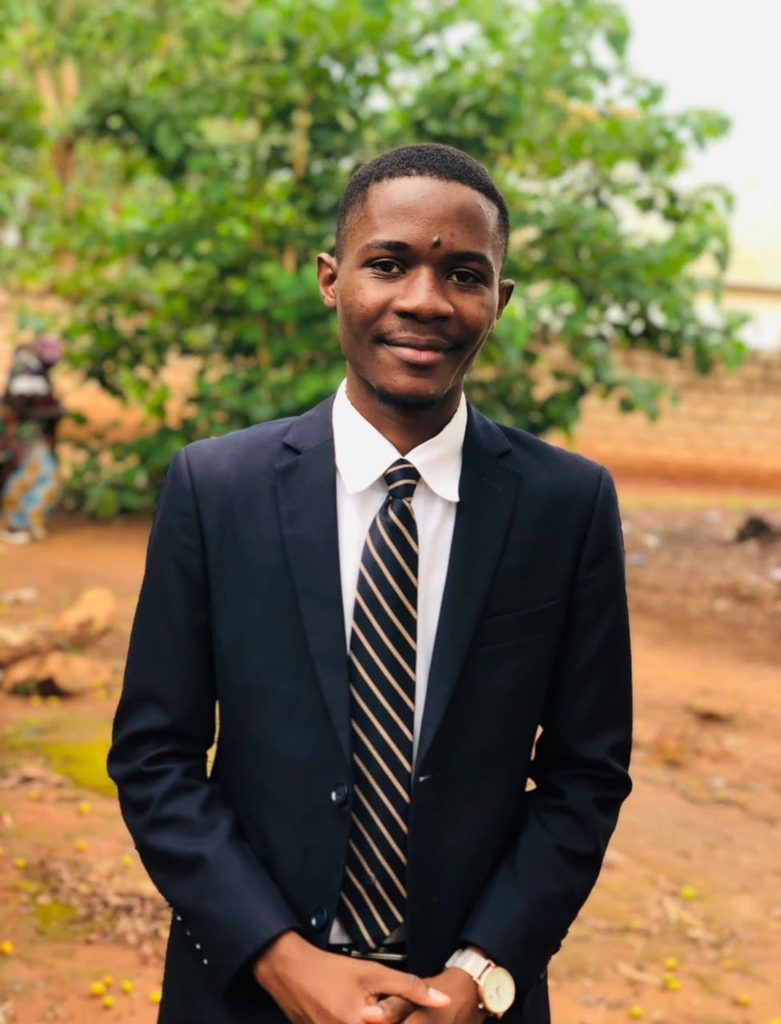
Isaac Kanyinji is a Zambian poet and short story writer based in Lusaka. His work has appeared in literary publications and platforms including Ubwali Literary Magazine, Publish’d Afrika, Poemify, Salamander Ink Mag, and Shenandoah. Outside writing, he hosts a radio show and describes himself as an avid reader of fiction.
His relationship with literature began long before the awards and publications. Growing up in Zambia, Kanyinji encountered books and stories from an early age. His mother encouraged reading, while his grandfather’s bookshelf provided another source of literary discovery. Childhood stories also became part of the environment that shaped his imagination.
Music played a role too. Lucky Dube’s reggae was part of his childhood, and Kanyinji has described Dube as the first poet he listened to. That observation offers an interesting glimpse into how broadly he understands literary influence. For him, poetry does not exist only on a page. It can live in music, memory, conversation and everyday experience.
His reading eventually expanded beyond the books around him. He has cited Khaled Hosseini, Mongo Beti and Ousmane Sembène among his fiction influences, while Ocean Vuong and Malawian poet Jack Mapanje are among the poets he reads. But reading has done more for Kanyinji than introduce him to writers he admires. It has also helped him understand the importance of developing a voice of his own.
Like many emerging writers, he once imagined writing like some of the authors he admired. With time, however, he recognised that certain writers have voices that cannot simply be replicated. That realisation pushed him towards discovering what belongs uniquely to him. One quality appears particularly important to that process: curiosity. Kanyinji describes himself as someone who questions the world around him, and that tendency influences his writing. His poems can begin with an idea but develop in unexpected directions as he writes. He does not always write because he has an answer. Sometimes, he writes because he has a question.
The Book
There is an important detail about Kanyinji’s career: he has not yet published his debut book.
In a 2025 interview, he explained that he was working towards a debut project but had not decided whether it would be a poetry collection or a collection of short fiction. Because he was first recognised as a poet, poetry remained a strong possibility.
For now, readers encounter his work through individual publications, with one poem standing out in particular: A 2019 Survey on How People Imagine Themselves Dying. Published by Ubwali Literary Magazine, the poem explores death, uncertainty and survival against the backdrop of the COVID-19 pandemic.
The poem has an unusual history. Kanyinji has explained that the work began before the pandemic had fully transformed everyday life. As COVID-19 unfolded, however, the poem developed alongside his own experiences. A difficult experience in a medical ward and an open call from Ubwali encouraged him to return to the unfinished piece.
The result is not simply a poem about fear. Death is present, but so are survival, humour, absurdity and the possibility of celebration. The poem moves between the psychological reality of a pandemic and unexpected imaginative moments, creating tension between the seriousness of its subject and the ordinary human desire to keep living. That balance caught the attention of the Ubwali Hope Prize judges. They praised the poem for balancing psychological crisis with everyday life and capturing the human impulse to seek joy amid profound trauma.
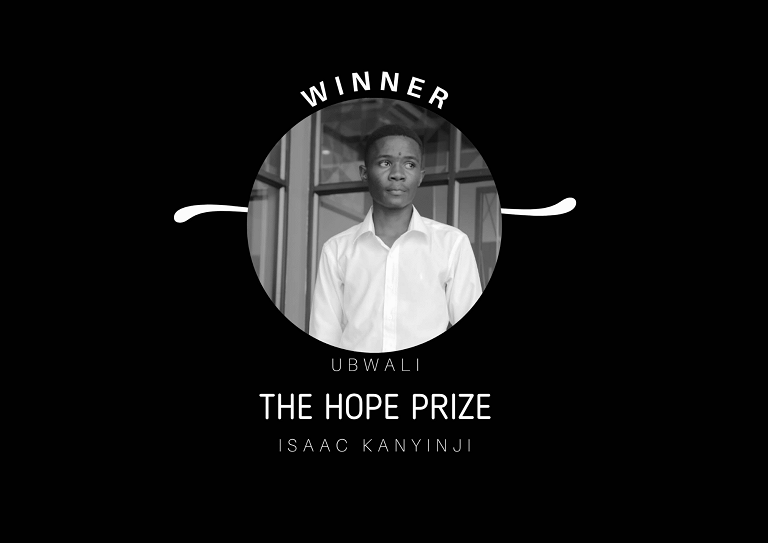
In 2025, Kanyinji won the Ubwali Hope Prize, receiving $500 and publication in Shenandoah, a long-running American literary journal. The recognition is significant because it arrives while Kanyinji is still shaping his first book. His literary identity is not yet fixed, and his debut could ultimately take him further into poetry, fiction or both. That uncertainty makes his current stage particularly interesting. Readers are seeing the work before it has been gathered into a definitive collection.
“Poetry is being what it has always been to me: a medium of expression. But sometimes I just never know how much is unsaid within me until I get a blank piece of paper.”
— Isaac Kanyinji

The Writing Journey
Kanyinji’s serious writing journey began while he was still in school. In the ninth grade, he read Jacob Nkosini Zulu’s Mwai Wanga. The experience inspired him to begin writing, and he soon started experimenting with short fiction. At first, the writing was private. He wrote stories without necessarily expecting anyone else to see them. Then one of his stories was read by a girl who enjoyed it and encouraged him to write more. It was a small moment, but an important one. Someone had read his work and wanted more. That encouragement helped move his writing from a private activity towards something he could share with an audience. His career has since developed through a series of publications and opportunities.
In 2022, his short story won the Publisher’s Choice Award in the Publish’d Afrika Magazine Short Story Competition. The recognition eventually led to the editing and publication of his ebook and connected him with Publish’d Afrika’s Adopt-An-Author programme. His work subsequently appeared in literary platforms including Ubwali Literary Magazine, Publish’d Afrika, Poemify and Salamander Ink Mag.
Then came the poem that would take his work further. The progression is worth noting. Before the prize came the poem. Before the poem came the writing. Before the writing came years of reading, experimenting and creating work without knowing where it would lead. Kanyinji’s writing process is similarly open-ended. He has explained that poems can steer themselves in directions he did not initially anticipate. Images and ideas emerge during the writing, allowing the work to develop beyond the writer’s original plan. That approach fits his natural tendency to question and experiment.
His surroundings and lived experiences also provide material. The COVID-19 pandemic, in particular, brought certain themes closer to him. Fear, illness, isolation and survival were no longer abstract ideas but experiences that shaped everyday life.
Writing became one way of processing those experiences. This is perhaps one of the strongest features of Kanyinji’s journey so far: his ability to transform ordinary observations and personal experiences into literary questions.
A global crisis becomes a poem. A childhood influence becomes part of a literary voice. A private story becomes a published work. And an unfinished poem eventually becomes an award-winning one.
“I wish to grow as a writer who is free and perhaps this is what freedom looks like.”
— Isaac Kanyinji
The Wit
Kanyinji’s work is not defined only by the seriousness of the subjects he explores. One of its more interesting qualities is his willingness to place difficult subjects alongside humour, absurdity and unexpected imagery.
A 2019 Survey on How People Imagine Themselves Dying demonstrates this clearly. The poem deals with death and pandemic anxiety, yet it does not remain emotionally heavy from beginning to end. Biblical imagery, surprising scenes and moments of humour interrupt the tension. That choice reflects something important about human experience. People do not experience difficult situations through one emotion alone. Someone can be afraid and still laugh. A person can experience grief and still celebrate. Isolation can create loneliness while simultaneously making people appreciate connection.
Kanyinji’s writing appears interested in those contradictions. The Ubwali judges highlighted this quality in their assessment of the poem, noting its ability to balance psychological crisis with ordinary life and its recognition of the human desire to seek joy in the middle of trauma. His wit, therefore, is not simply about making serious writing funny. It is about allowing different realities to exist together. That quality also connects with his experimental approach. Because he allows poems to develop rather than forcing them into predetermined structures, unexpected images and connections can emerge.
The reader may begin with one expectation and discover something else along the way. That unpredictability is part of the appeal. Kanyinji does not always appear interested in telling readers exactly what to think. Instead, he creates situations that leave them with questions of their own. And perhaps that is where his wit and curiosity meet. He asks questions through the work, then allows the reader to continue asking them after the poem ends.

What He Teaches
Kanyinji’s journey offers a straightforward lesson for emerging writers: Keep writing before anyone is watching.
His early stories were written privately. He continued reading and experimenting before his work began appearing in literary publications. Recognition came later. His short story was recognised by Publish’d Afrika. His poetry found a home in Ubwali. Eventually, his poem won the Ubwali Hope Prize and reached Shenandoah.
The lesson is not that every writer will follow exactly the same path. It is that the work has to exist before anyone can discover it. Kanyinji also demonstrates that recognition does not have to become a finish line. After receiving attention for his work, he described the recognition as a “pat on my shoulder” and motivation to reach for more. That mindset matters.
A publication is not the end. A shortlist is not the end. An award is not the end. Each one can simply become another reason to keep developing the craft. Kanyinji’s experience also challenges the pressure to choose one literary identity too early. He writes both poetry and short fiction. Although he has acknowledged that working across genres can feel intimidating, his experiences have reinforced his willingness to pursue both.
For emerging writers, that is an important reminder. You can experiment. You can change direction. You can write poetry today and fiction tomorrow. Your first literary identity does not have to determine your entire career. Kanyinji’s advice captures the idea simply:
“Keep writing and believe in the craft you are creating.”
The simplicity of that advice is perhaps what makes it useful. Read widely. Write consistently. Experiment. Submit your work. Keep improving. And allow yourself time to become the writer you are still learning to be.
The Invitation
Isaac Kanyinji is at an exciting point in his literary career. He has built a growing publication record, won the 2025 Ubwali Hope Prize, and seen his winning poem reach Shenandoah. Yet his debut book is still ahead of him. His story, in other words, is still being written. His first collection could be poetry, short fiction, or something entirely unexpected. That uncertainty is part of what makes an emerging writer worth watching.
For readers, this is an opportunity to discover Kanyinji before a debut collection potentially introduces him to a much wider audience. For writers, his journey offers an important lesson: do not wait for recognition before taking your work seriously. His early stories began without an audience. His award-winning poem was once unfinished. His debut book is still taking shape. The work came first; recognition followed.
That is often how literary careers are built: not through one dramatic breakthrough, but through small decisions to keep writing, revising, finishing and submitting. Read the book that teaches you something. Write the story that will not leave you alone. Finish the poem. Rewrite the draft. Submit it. Then begin again.
For Kanyinji, that process has already taken him from private writing to literary publications, from competition recognition to an international literary journal. And there is still more ahead. That is why his story belongs in The Literary Spotlight Column.
Not because his future is guaranteed, but because his present already gives readers a reason to pay attention. His writing is evolving, his debut book is taking shape, and his next chapter remains unwritten. So, what will Isaac Kanyinji write next?
That may be the most interesting question of all.
For every writer wondering whether their own work is worth pursuing, perhaps the better question is: What will you write next? And when you are ready to take that next step, ACEworld Publishers is here to help take your manuscript from idea to publication, helping authors transform their stories into books ready to meet the world.
Every published book begins with a writer who decides to begin.
The Literary Spotlight is a weekly editorial column on the ACEworld Blog celebrating the authors shaping the future of African literature. To nominate an author for a future edition, contact us.
