The Boy from Port Harcourt Who Wrote a Novel on Scraps of Paper and Changed Nigerian Literature
Picture this. A teenage boy sits in a boarding school dormitory in Owerri, southeastern Nigeria. It is 2014. The Nigerian parliament has just passed one of the most debated laws in the country’s history: the Same Sex Marriage Prohibition Act, which criminalises same-sex relationships with up to fourteen years in prison. The boy does not fully understand the law yet. What he does understand is that he has found an essay tucked into the back of a current affairs book, written by a woman named Chimamanda Ngozi Adichie, asking a question that will stay with him for years: Why can’t he just be like everyone else?
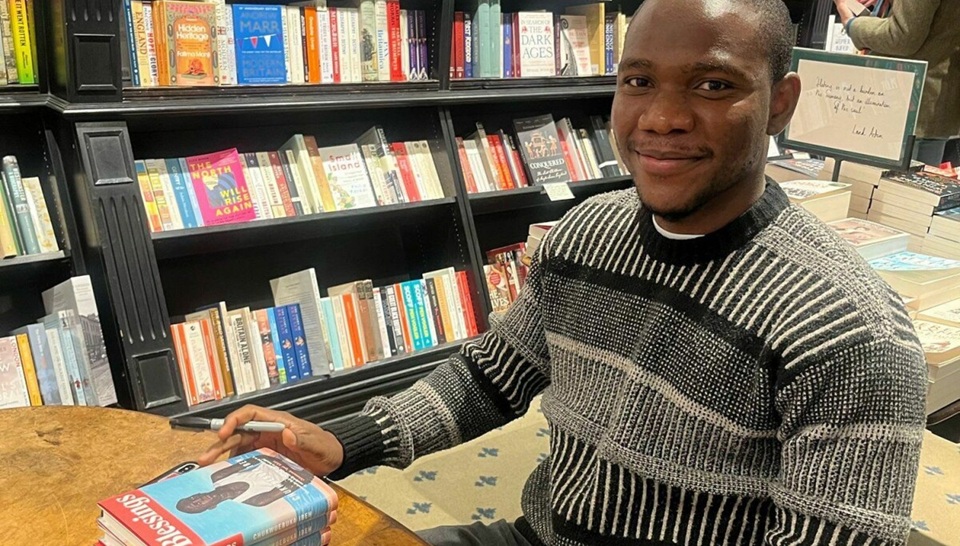
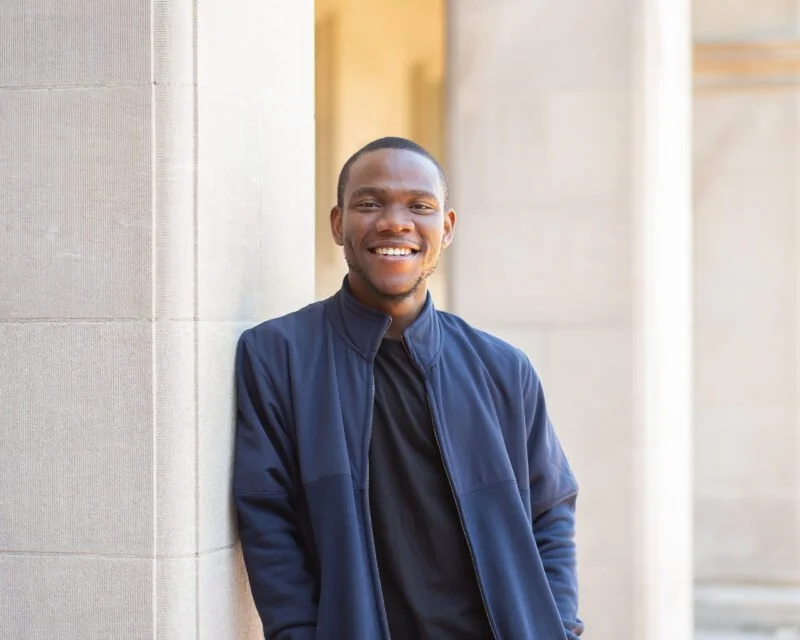
That boy was Chukwuebuka Ibeh. He was perhaps thirteen or fourteen years old. He did not yet know that one day he would sit in Adichie’s own writing workshop. He did not yet know that the question she posed would become the seed of a novel that would land him a publishing deal with Penguin Random House, a BBC Best Book of 2024 citation, and the praise of some of the most celebrated writers in the English-speaking world. He did not know any of that. He only knew that the question mattered, and that one day he would have to answer it.
He answered it in a book called Blessings. And he was twenty-four years old when the world read it.
Who He Is
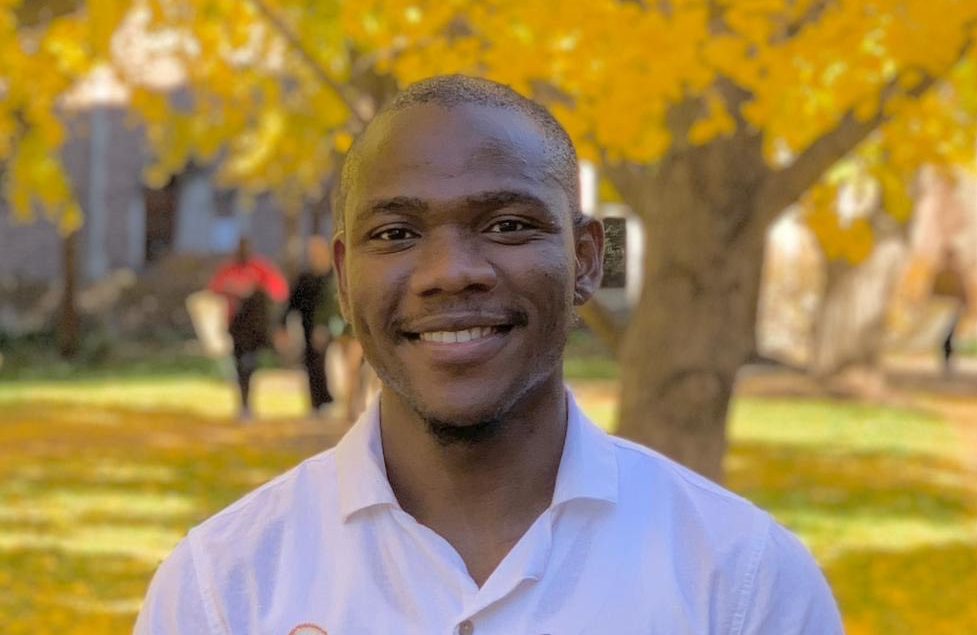
Chukwuebuka Ibeh was born in Port Harcourt, Rivers State, Nigeria, in the year 2000. He is the second of three children, raised in what he describes as a relatively middle-class family. By his own account, storytelling entered his life early. His grandmother was his first teacher. She told him stories, and something in those stories took hold. He moved, as he tells it, from listening to oral storytelling to the deliberate act of putting words on paper, evolving that early love into a discipline that would define everything that followed.
He attended a boarding school in Owerri, an experience that would later shape the world of his debut novel in ways both direct and oblique. He has described his boarding school as sometimes feeling like the set of The Hunger Games, a place where growing up felt like an adventure, and where the intricate power structures, the schemings, and the complex relationships between young people provided more material for a novelist than most environments could offer in a lifetime.
Before his novel was published, Ibeh was already being noticed. In 2019, Electric Literature named him one of the Most Promising New Voices of Nigerian Fiction. He became a staff writer at Brittle Paper, Nigeria and Africa’s most important literary platform. He submitted to prestigious competitions and placed: runner-up for the 2021 J.F. Powers Prize for Fiction, finalist for the Gerald Kraak Award, finalist for the Morland Foundation Scholarship. He was studying the craft obsessively, reading widely across fiction and nonfiction, paying attention not just to what writers were saying but to how they were saying it.
In 2022, he enrolled in a fully funded MFA programme at Washington University in St. Louis, Missouri, one of the most competitive creative writing programmes in the United States. By that time, he had already written most of the novel that would make his name. He completed the editing process from across the Atlantic, pulling late nights to meet publisher deadlines while managing the demands of graduate school, sustained by what he calls a labor of love and the patience of a community, his editors and his writing professors, that believed in what he was making.
I also have always wanted to understand the Same Sex Marriage Prohibition Act, which I think is one of the strangest legislations to have been passed by the Nigerian parliament. The book is really interrogating what it means to grow up queer in Nigeria, and how that experience affects not just the main character but his family too.
– Chukwuebuka Ibeh, in conversation with Afreada
The Book
| Title | Blessings |
| Publisher | Viking Books (Penguin Random House) |
| Year | 2024 |
| Genre | Literary Fiction, Coming-of-Age |
| Languages | Published simultaneously in English, German, and Spanish |
| Available | Amazon, Masobe Books, and major international bookstores |
Blessings opens with a family falling apart in the particular, quiet way that Nigerian families do, not with one loud rupture but through the accumulation of silences and unspoken fears. Obiefuna has always been the black sheep of his family, sensitive where his father Anozie is pragmatic, a dancer where his brother Ekene is a natural athlete. When his father witnesses an intimate moment between Obiefuna and the family’s apprentice, a boy who has come to live with them from a nearby village, his deepest fears are confirmed and Obiefuna is banished to a Christian boarding school far from home.
What follows is a coming-of-age story of rare emotional precision. At school, Obiefuna navigates a strict hierarchy, unpredictable violence, and the complicated terrain of adolescent desire. He finds and hides who he truly is. Meanwhile, his mother Uzoamaka, kept in the dark about why her favourite son was sent away, is left to reckon with long-avoided truths about her marriage, her husband, and herself. The novel alternates between their two perspectives with tremendous control, building a portrait of love that is simultaneously present and withheld, fierce and self-defeating.
The backdrop to Obiefuna’s journey is the slow creep of the Same Sex Marriage Prohibition Act into Nigerian life, a law that by the time he reaches adulthood has made the life he wants to live not just difficult but actively criminal. Ibeh is careful not to let the law become the subject of the novel, but he allows it to be the atmosphere, the pressure that shapes every relationship, every decision, and every silence in the book.
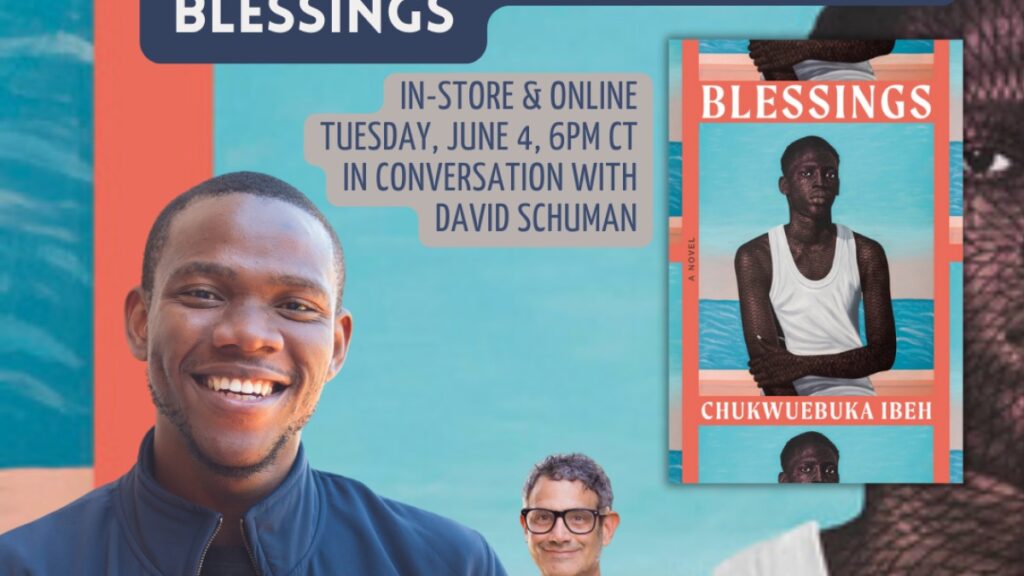
Blessings was released simultaneously in six territories and three languages. It was named a BBC Best Book of 2024, listed among Esquire’s recommended books of 2024, and shortlisted for the Wilbur Smith Adventure Writing Prize. It was also recommended publicly by Zadie Smith, one of the most influential novelists writing in English today. Chimamanda Ngozi Adichie, who had taught Ibeh in her workshop, described his writing as having a certain delicacy to it, so wonderfully observant, and so beautiful. The Guardian called it a sublime coming-of-age tale. The Telegraph called it magnificent. The Daily Mail called it stark yet tender.
None of these reviews are surprising once you have read the book. Blessings is the kind of novel that makes you feel, on every page, that you are in the hands of a writer who knows precisely what they are doing and why.
The Writing Journey
Here is a detail that matters more than it might first appear. Chukwuebuka Ibeh began writing Blessings on scraps of paper. Not in a notebook. Not in a journal. On scraps of paper, the kind of thing a person reaches for when they do not have anything better to hand but the story inside them will not wait. He typed those scraps into a computer. He kept going. This is how a novel about longing and erasure began its own life, as fragments rescued from wherever he could find to write them.
The writing happened largely in isolation. Much of the first draft was completed during the COVID-19 pandemic lockdown, a period when many people around the world found themselves stripped of distraction and confronted with whatever they had been putting off. For Ibeh, that meant confronting the story he had been carrying since his boarding school days, since reading that Adichie essay, since asking himself what it meant to grow up queer in a country that had just decided to criminalise that existence.
He has been candid about the hardest part of the journey. It was not the writing. It was the rejection. The consistent early rejections that make you doubt yourself and question your right to do what you are doing. Every serious writer knows this experience, but knowing it abstractly is different from living through it, submitting work into what can feel like silence and receiving only nos in return. Ibeh went through it. He kept writing anyway.
By the time Viking Books announced its acquisition of Blessings in October 2022, describing the manuscript as miraculous, Ibeh was enrolled in his MFA programme at Washington University. He completed the editorial process from the United States, editing a novel set entirely in Nigeria while living thousands of miles from home, meeting deadlines from a different time zone, and doing it all on the kind of schedule that would defeat someone who was not genuinely in love with the work.
In May 2023, a year before the book’s release, the film rights were sold to The Artists Partnership, a talent agency based in London. Also in May 2023, Ibeh gave a TEDx talk entitled What Are African Values? at Washington University. The novel had not yet been published, and already it was moving through the world in ways that most writers never experience in a career, let alone before a debut.
The hardest part of the publishing journey would always be the rejections. Those consistent early nos that make you doubt yourself and question your right to do what you are doing. It gets better, thankfully.
– Chukwuebuka Ibeh, in conversation with Afreada
The Wit
What makes Chukwuebuka Ibeh exceptional as a writer is not simply that he has chosen a difficult subject. Many writers choose difficult subjects. What separates Ibeh is his restraint: the ability to write about criminalisation, family rupture, and the daily violence of erasure without ever allowing the political to swallow the personal. This is a far rarer skill than it sounds.
In Blessings, he stages a deeply specific story of one boy and one mother in Nigeria, and allows the political reality of the country to press against their lives from the outside rather than from within. The Same Sex Marriage Prohibition Act is never the subject of a lecture or a speech inside the novel. It is simply the sky, the pressure under which everyone lives and moves and makes choices. This approach requires extraordinary discipline. A less confident writer would have let the law become the argument. Ibeh lets it become the weather.
His prose has been described by multiple reviewers as having music to it. There is rhythm in his sentences that operates beneath the level of conscious reading, a quality that makes pages disappear without the reader quite knowing why. He writes what he has called a particular kind of fiction, one that is not only concerned with what is being said but obsessively attentive to how it is being said. That attentiveness is visible in every scene.
What Ibeh does in Blessings that is perhaps most technically impressive is his handling of the two alternating perspectives. Obiefuna and Uzoamaka are not simply two characters who share a story. They are two people who love each other across a silence that neither of them can fully name. Ibeh renders that silence, that space between them, with a precision that feels almost architectural. The reader knows things that neither character knows. The reader sits in the gap between them, feeling what they cannot say to each other, for the entire length of the novel.
That is wit in the oldest and deepest sense of the word: not cleverness, but intelligence applied to the full weight of human feeling.
What He Teaches Us
If you have a manuscript sitting somewhere, on your phone, in a notebook, in a folder on your desktop that you open and close without adding to it, here is what Chukwuebuka Ibeh teaches you. He started his novel on scraps of paper. Not with perfect conditions. Not with a publisher waiting. Not with an MFA. With scraps.
He teaches you that the rejection is not the end of the story. It is part of the story. Every writer who has ever built something worth reading has a version of the consistent early nos. Ibeh went through them and kept going. The only question is whether you keep going too.
He teaches you that a story does not have to be universal to travel. His novel is about one boy in Port Harcourt, in a very specific country, under a very specific law, navigating a very specific kind of love. And it was published in six territories and three languages. Because specificity, when it is written with enough honesty and enough care, is always universal. Readers in Germany and Spain and the United States recognised something true in Obiefuna’s life. They always do, when the writing is true.
He teaches you, most importantly, that your age is not the reason you cannot publish. He was born in 2000. He published his debut with one of the largest publishing houses in the world at twenty-four. The only question that matters is not how old you are. It is whether you are writing.
There is a book inside you that only you can write. Chukwuebuka Ibeh wrote his on scraps of paper in a boarding school dormitory in Owerri, and on the quiet evenings of a pandemic, and through the fatigue of graduate school in a country far from his own. He wrote it without certainty. He wrote it in spite of rejection. He wrote it because the story would not leave him alone.
Your story is waiting. Your readers are waiting. Your published book is waiting to exist in the world. You do not need perfect conditions. You do not need to wait until you feel ready. You need to begin, and then to keep going.
When you are ready to take your manuscript from idea to published, ACEworld is here. We help Nigerian authors bring their books into the world, professionally, globally, and with the care that every story deserves.
The Literary Spotlight is a weekly editorial column on the ACEworld Blog celebrating the authors shaping the future of African literature. To nominate an author for a future edition, contact us.
